

How Cloud Computing and DevOps Are Revolutionizing Businesses
Boost efficiency, scalability, and innovation with cloud and DevOps practices
 insights.sitarainnovations.comJune 5, 20241 Mins read102

Cloud computing and DevOps have transformed the way businesses build, deploy, and manage applications. Cloud platforms allow companies to scale infrastructure on demand, while DevOps practices streamline development, deployment, and collaboration.
By combining cloud services with DevOps methodologies, organizations can deliver software faster, reduce costs, and improve reliability. These approaches are now essential for modern businesses aiming to remain competitive in the digital age.
Efficiency, scalability, and agility are at the core of cloud and DevOps solutions.
Gene Kim
Why Cloud Computing and DevOps Matter
Adopting cloud computing eliminates the need for expensive physical servers and provides flexible, on-demand resources. DevOps ensures smooth collaboration between development and operations teams, enabling faster software delivery and continuous improvement.
Key Benefits of Cloud & DevOps
“Cloud computing and DevOps together allow businesses to innovate faster, respond to market changes, and deliver better services to their users.”
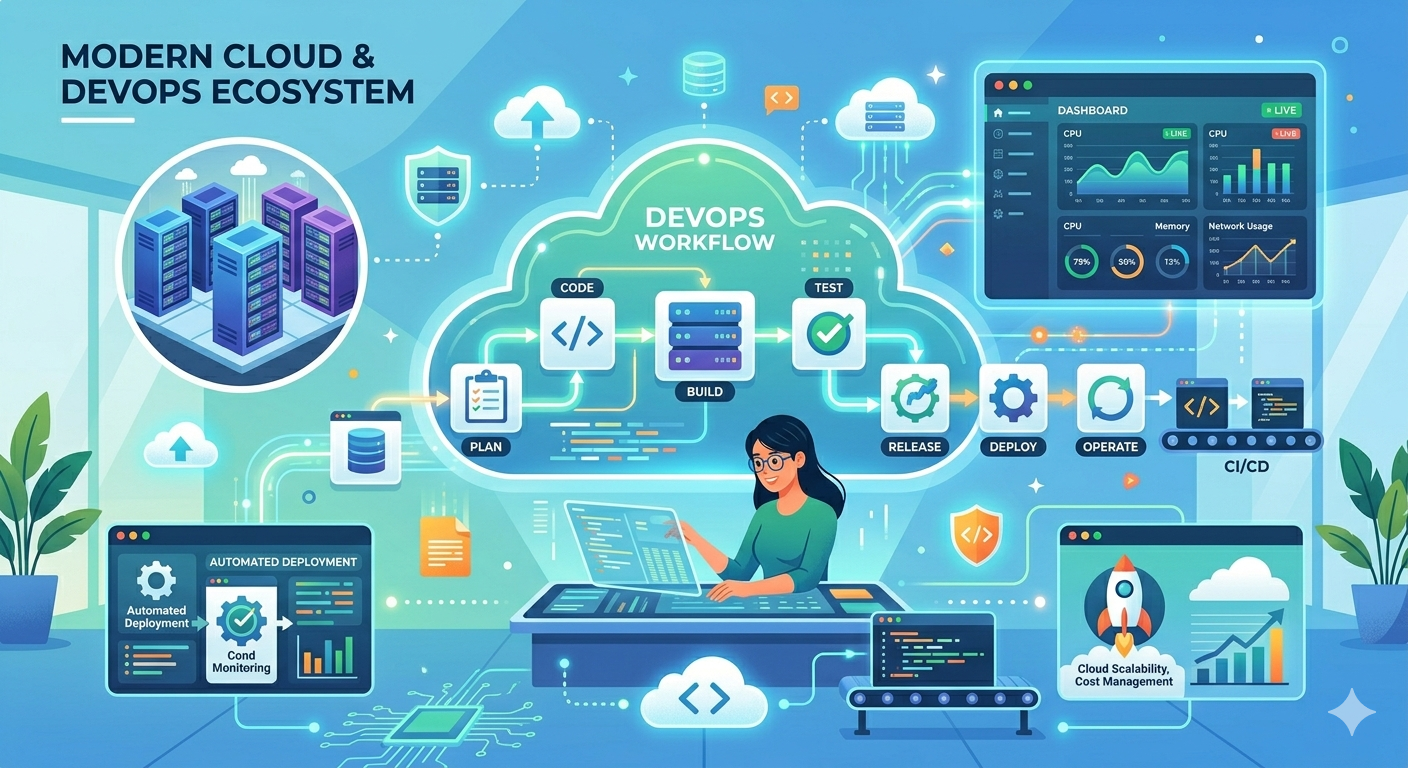
Cloud computing provides:
- Scalable storage and processing power
- Remote access to applications and data
- Cost-efficient IT management
DevOps practices offer:
- Continuous integration and deployment (CI/CD)
- Automated testing and monitoring
- Faster response to issues and improvements
Businesses that leverage these technologies can reduce downtime, improve customer satisfaction, and accelerate digital transformation.
Tools & Technologies
Popular cloud platforms include Amazon Web Services, Microsoft Azure, and Google Cloud Platform. DevOps tools like Jenkins, Docker, and Kubernetes automate workflows, streamline deployments, and improve reliability.
Cloud and DevOps also promote collaboration and transparency, helping teams work more effectively and deliver higher-quality products. Investing in cloud computing and DevOps not only enhances efficiency but also enables businesses to innovate quickly and stay competitive.



Leave a comment