

Building a Restaurant Website: A Case Study
How a well-designed website improved a restaurant’s online presence and orders
 insights.sitarainnovations.comJune 5, 20241 Mins read61
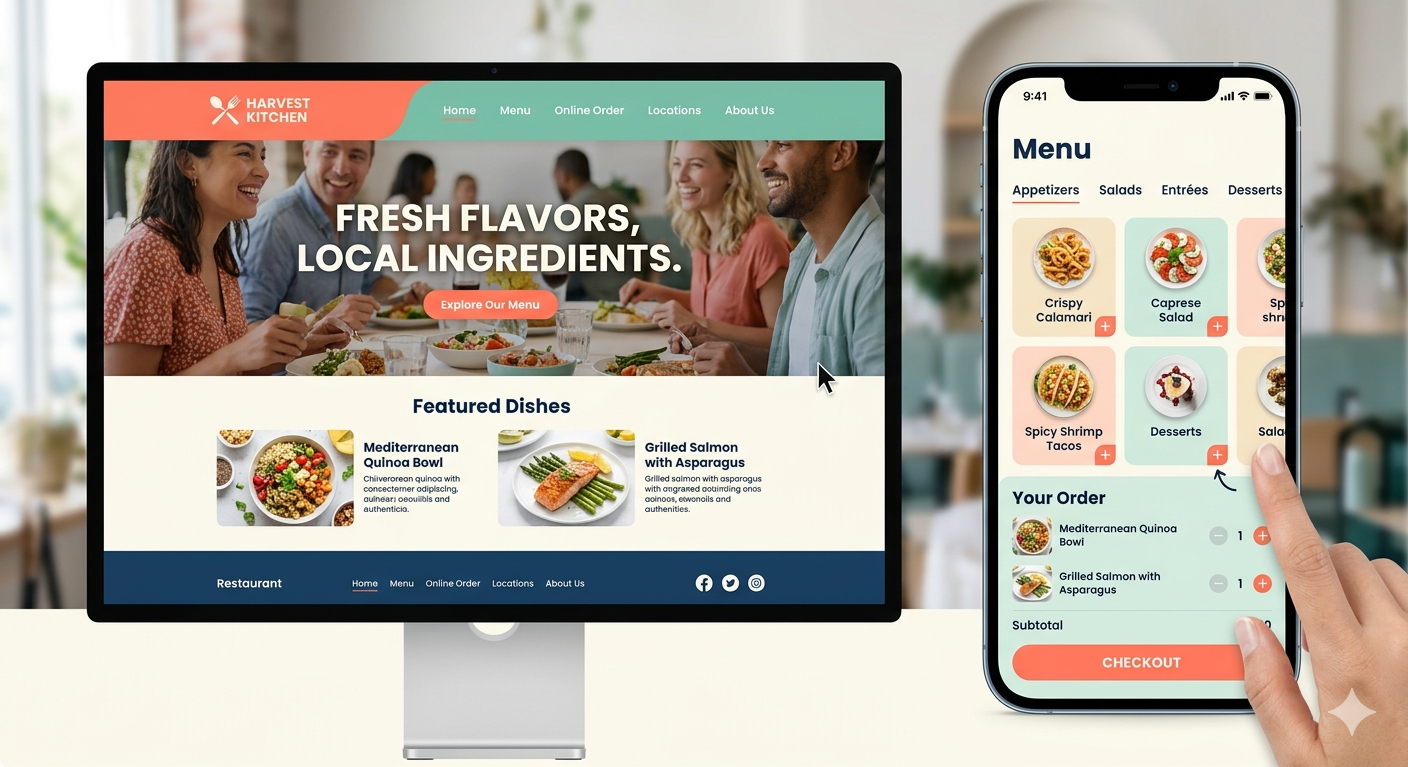
Creating a successful website requires careful planning, design, and implementation. In this case study, we explore how a restaurant website can be built to attract customers, enhance user experience, and drive online orders.
From understanding the client’s goals to designing a responsive layout and implementing functionality, each step plays a crucial role in delivering a website that meets business objectives.
Design is intelligence made visible.
Alina Wheeler
Project Overview
The restaurant wanted a website that would:
- Showcase the menu and special dishes
- Allow online reservations and ordering
- Provide an easy-to-navigate mobile-friendly design
The goal was to create a website that reflected the restaurant’s brand and attracted more customers online.
Key Benefits of the Website
“By implementing a responsive design and intuitive navigation, the restaurant saw increased engagement and higher online orders.”
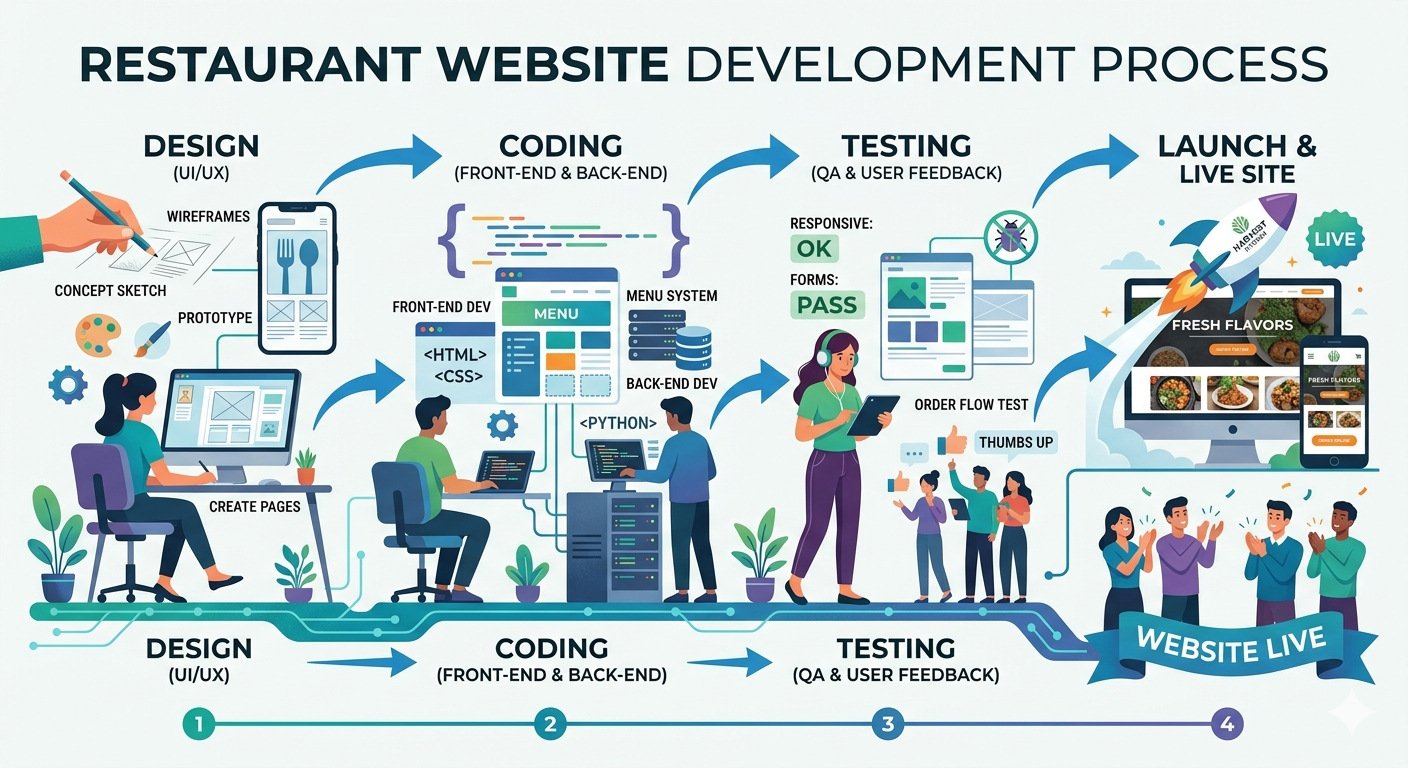
The website included:
- A modern homepage highlighting featured dishes
- Online reservation and contact form
- Integration with Google Maps for easy location access
- Social media links for wider engagement
The design focused on aesthetics, usability, and performance. Users could easily browse the menu, view special offers, and place orders with minimal clicks.
Tools & Technologies Used
The project used a combination of:
- WordPress for content management
- Elementor for visual design and page building
- WooCommerce for online ordering
- Responsive frameworks to ensure mobile compatibility
These tools ensured a professional and functional website that met the client’s expectations.
Results & Insights
The restaurant saw measurable improvements:
- Increased website traffic
- Higher online orders
- Positive user feedback regarding navigation and design
Case studies like this show the importance of aligning business goals with design and development strategies.







How Artificial Intelligence is Transforming Modern Businesses
Understanding how AI is reshaping the future of business and technology
insights.sitarainnovations.com1 Mins read

The Power of Digital Marketing in Growing Your Business
How digital strategies help businesses reach, engage, and convert customers
insights.sitarainnovations.com1 Mins read

Why UI/UX Design is Critical for Website Success
Enhancing user satisfaction and engagement through smart design
insights.sitarainnovations.com1 Mins read

How Startups Can Leverage Technology for Growth
Leveraging technology to grow and scale modern startups efficiently
insights.sitarainnovations.com1 Mins read




Leave a comment